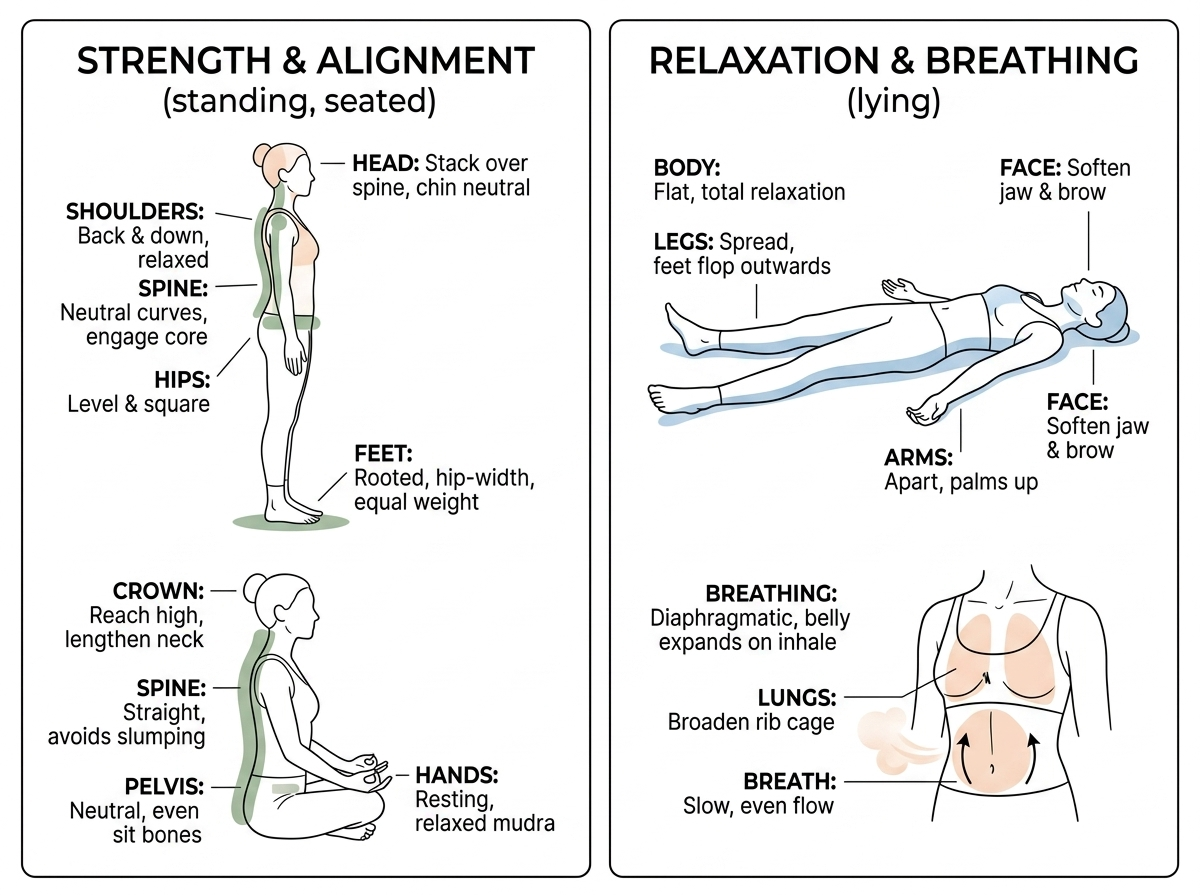
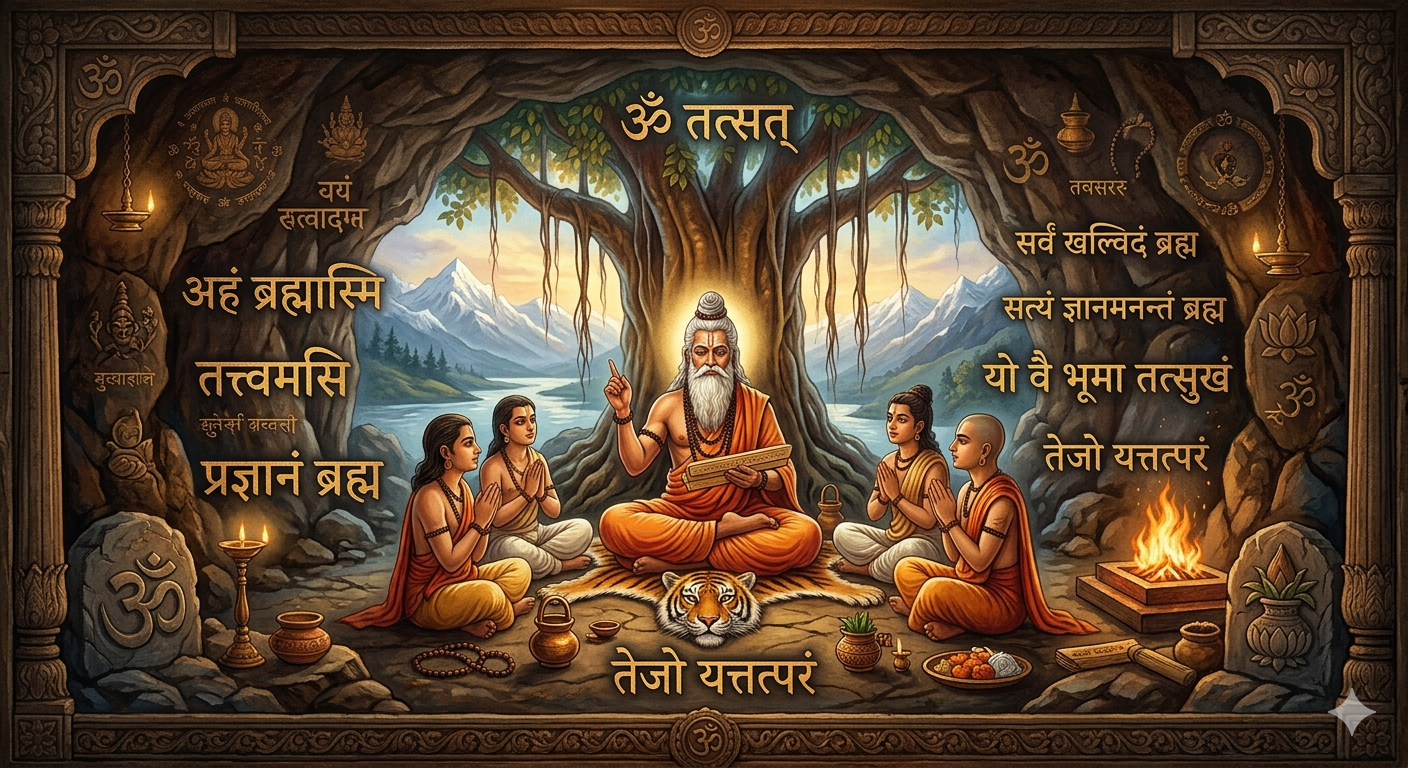
Guidelines for Meditation The Physical Foundation The body is the container for the mind. Before you focus on thoughts, settle the frame. Posture: “Find a seat that is both upright and relaxed. Imagine a thread pulling gently from the crown of...

Guidelines for Meditation The Physical Foundation The body is the container for the mind. Before you focus on thoughts, settle the frame. Posture: “Find a seat that is both upright and relaxed. Imagine a thread pulling gently from the crown of...

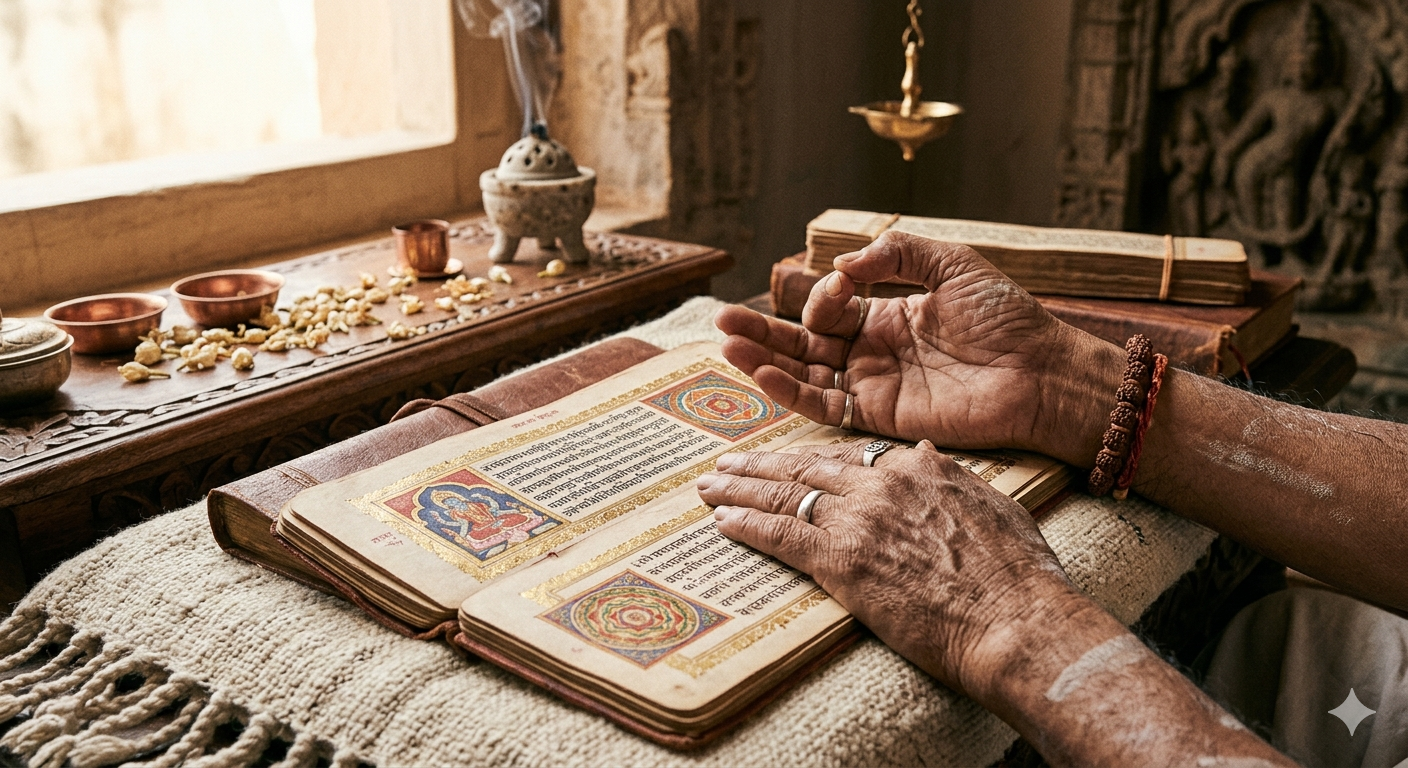
Ramcharit Manas It is a guide on how to live with Truth , Duty and Love The epic is traditionally divided into seven books, known as Kands. 1. Bala Kand 2. Ayodhya Kand 3. Aranya Kand 4. Kishkindha Kand 5. Sundara...

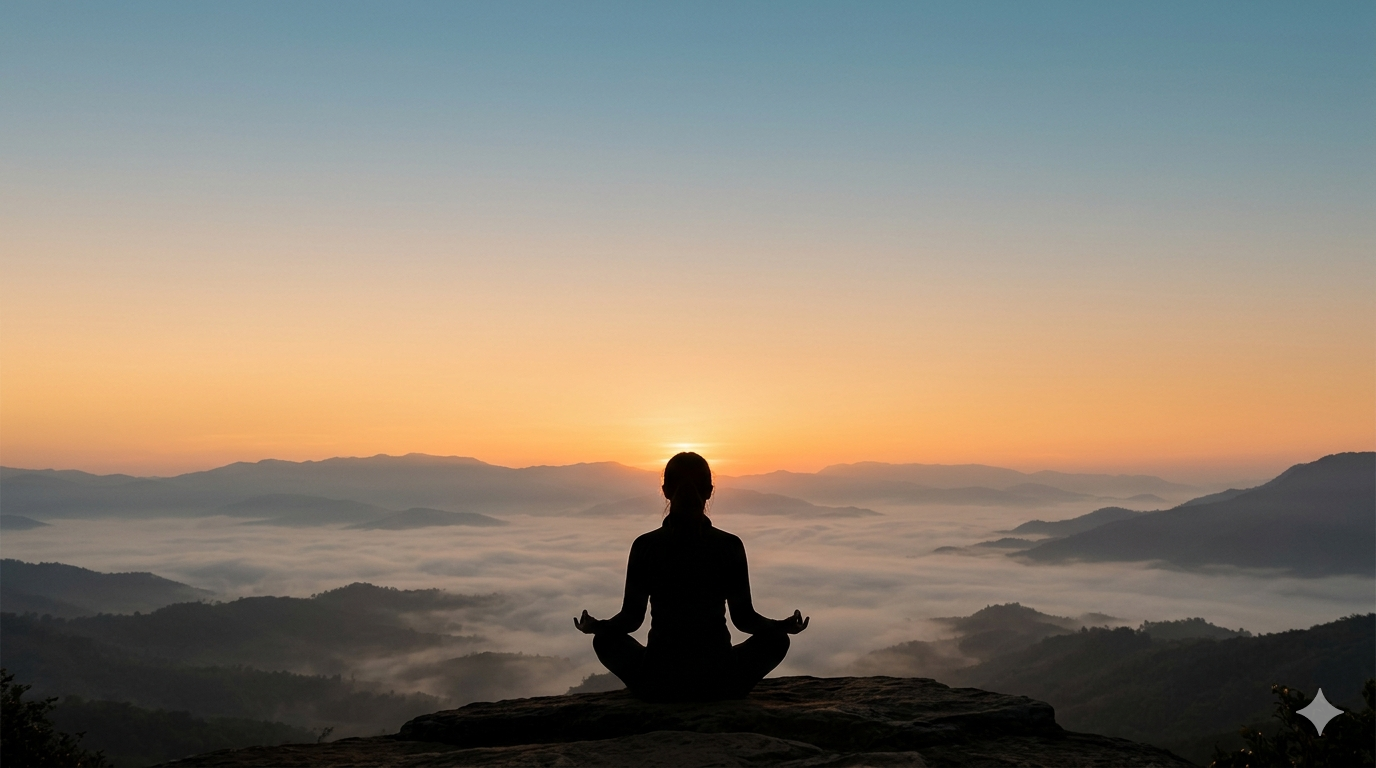
What is Meditation Meditation is a practice of intentional stillness that acts as a bridge between the active world and your inner calm. Unlike sleep, it provides a “conscious rest” for the mind, allowing you to recharge while remaining alert and...

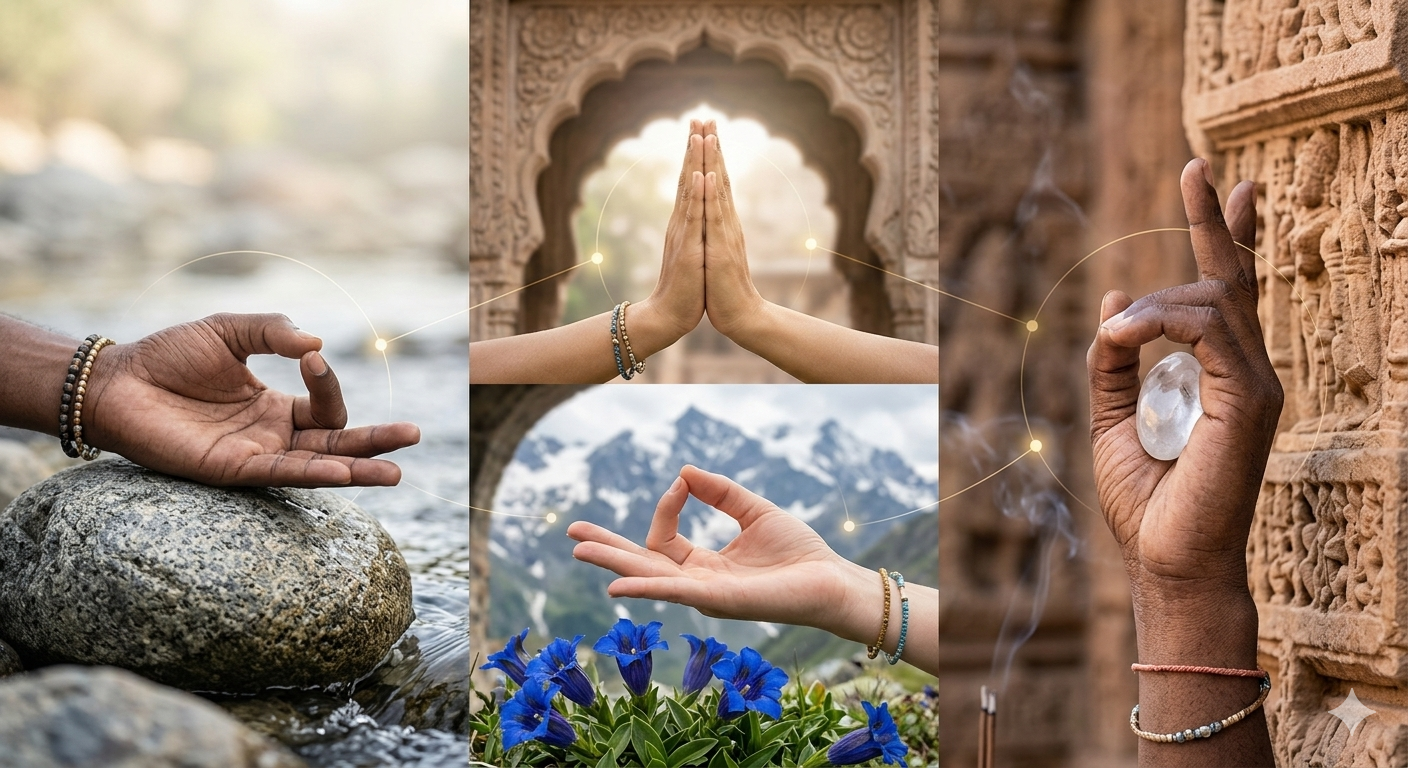
Ancient Mudras For Spritual Balance A Mudra is a symbolic or ritual hand gesture used in yoga and meditation to act as a “hand seal” for the body’s energy. By touching the fingertips together—which serve as terminals for the body’s internal...

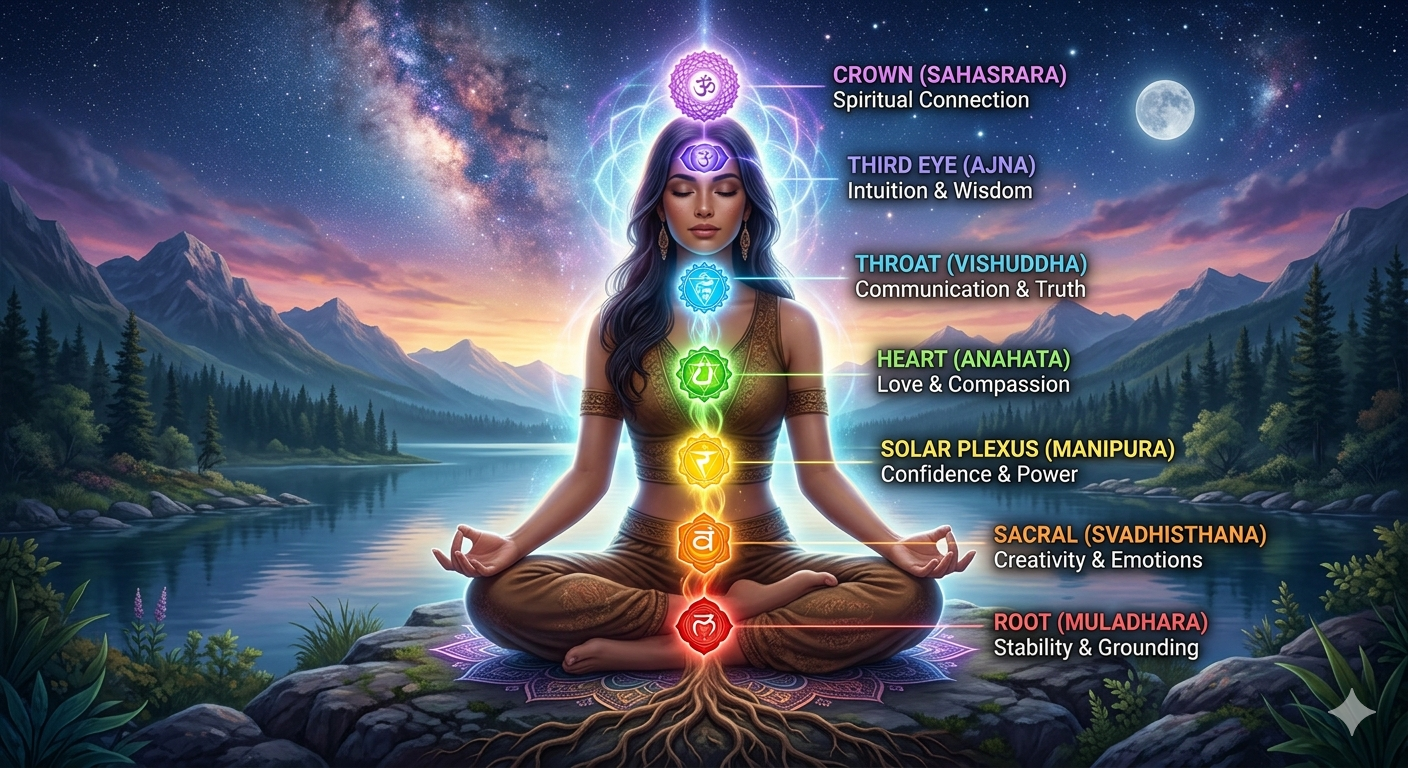
Spiritual Awakening Through Chakras Chakras MULADHARA CHAKRA SVADHISHTH CHAKRA MANIPURA CHAKRA ANAHATA CHAKRA VISHUDDHA CHAKRA ANJA CHAKRA SAHASRARA MUDRA Chakras are energy centers in the body that control the flow of life energy (prana). There are seven main chakras, each connected...

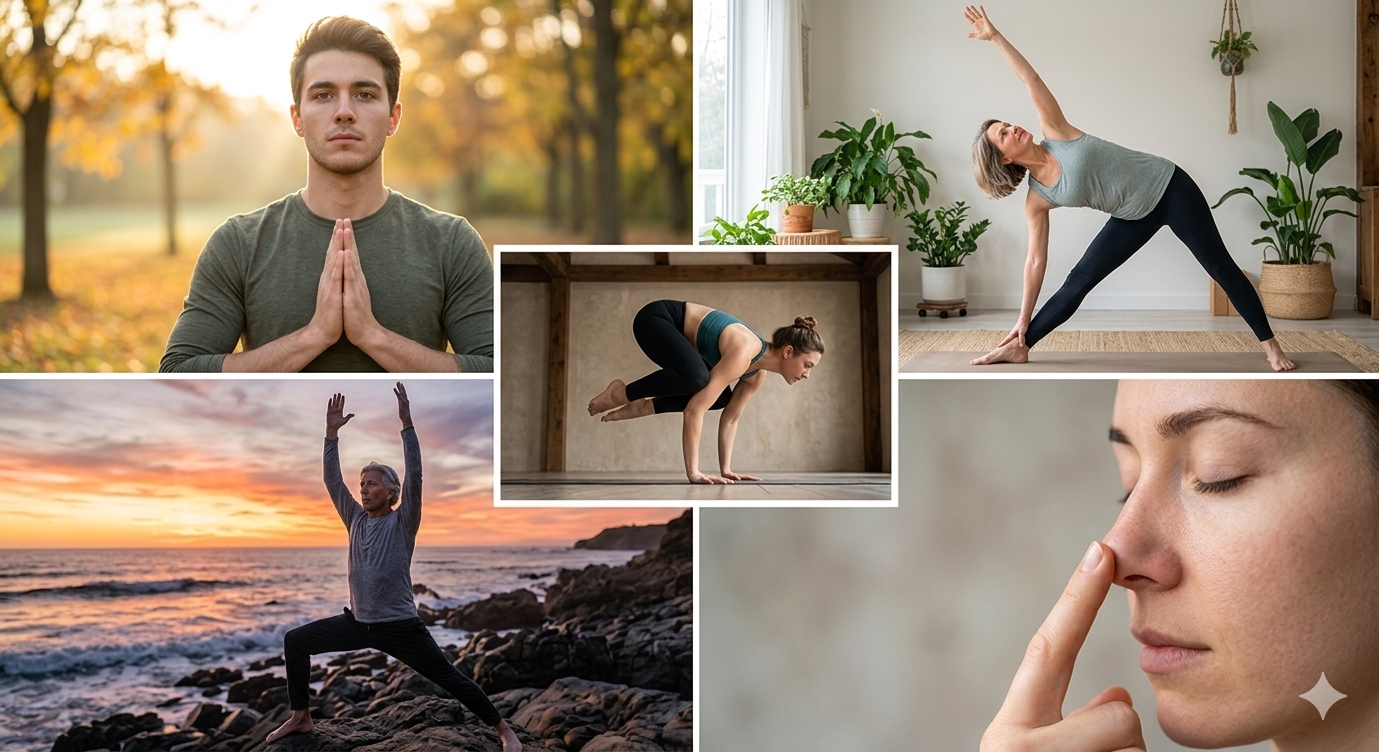
YOGA Yoga is a holistic practice originating in ancient India that integrates physical postures (asanas), breath control (pranayama), and meditation. It aims to harmonize the body, mind, and spirit, promoting overall physical flexibility, mental clarity, and emotional balance.Yoga turns every breath,...

Inner flow Inner Flow is when your breath moves like gentle ocean waves. No effort, No blocks. Just calm ,steady ease. Stress and busy thoughts break this natural rhythm. Through simple breathwork and meditation, the wave becomes smooth again. Breath:- When...

“18 Life Lessons from the Bhagavad Gita” Bhagavad Gita teaches duty, wisdom, self-discipline, and the path to a meaningful life through a dialogue between Arjuna and Krishna. The Yoga of Arjuna’s Despair: Arjuna Vishada Yoga In the First Arjuna Vishada Yoga,...
It can be a powerful tool for mental and emotional well-being. It often provides a sense of hope, helps people cope with difficult life events, and values like kindness, patience, and gratitude.
In short, it’s not about having all the answers—it’s about the process of asking deep questions and seeking a sense of balance and harmony in your life.
When the workload piles up, our natural instinct is to panic or get frustrated (reaction). Spirituality teaches you to take a “micro-pause.”
Life will always have “up and down” moments—health issues, financial stress, or family arguments. Spirituality provides an inner anchor. It gives you the perspective that “this too shall pass,”
Continuous work creates “mental noise.” Simple spiritual habits—like focusing on your breath for two minutes or using a grounding hand gesture—work like hitting the refresh button on a cluttered computer.
Daily chores and office work can often feel “dry” or boring. Spirituality helps you shift your perspective to Karma Yoga (the path of action). You start seeing your work not just as a way to earn, but as a way to serve others or master a skill.
When you are stressed, your brain stays in “survival mode,” which makes it hard to think long-term. A spiritual practice helps lower your cortisol (stress hormone), allowing the logical part of your brain to take over.
Working long hours can leave you feeling drained. Spirituality teaches you how to protect your “life force.” By staying “aligned” and mindful of your posture and breath while you work