
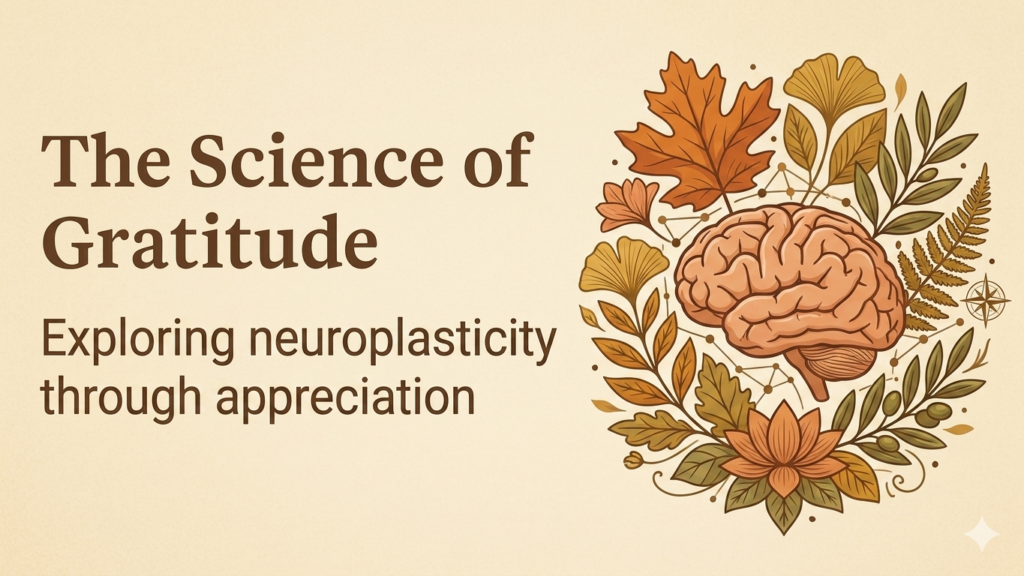
Think of your brain like a smartphone. Naturally, it has an old security app running in the background that is constantly looking for viruses, glitches, and threats. This is your brain’s negativity bias—an automatic habit of focusing on what is wrong, stressful, or annoying.
Practicing gratitude is like downloading a brand-new update for your brain. It trains your mind to scan your day for the good stuff instead of just the bad.
It Changes Your Brain Chemistry: When you notice something you appreciate, your brain instantly releases a rush of dopamine and serotonin. These are your body’s natural “feel-good” chemicals. They lift your mood, calm your thoughts, and lower your anxiety on the spot.
It Shuts Off the Stress Alarm: When you are stressed, your body enters “fight-or-flight” mode, pumping out cortisol (the stress hormone) that makes your heart race and drains your energy. Feeling thankful flips a switch to “rest-and-digest” mode, which lowers your heart rate, relaxes your muscles, and lets your body heal.
The Golden Rule: Gratitude does not mean pretending everything is perfect. It just means remembering that even on a really bad day, there is always something small that is still good.
Your brain is naturally wired to notice problems. It acts like a camera that automatically zooms in on things that are stressful, annoying, or broken. This is a survival habit left over from thousands of years ago when humans had to look out for danger constantly.
Gratitude is simply training your mind to zoom out. It is a daily practice that helps you see the whole picture, reminding you to notice the good things alongside the hard things.
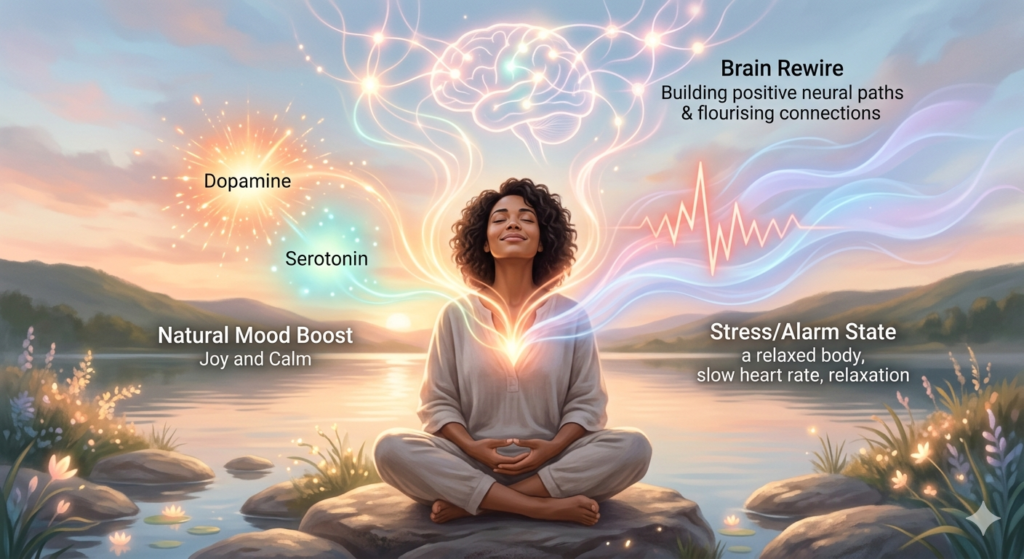
A Natural Mood Boost: The exact moment you focus on something you appreciate, your brain releases a quick dose of dopamine and serotonin. These are your body’s built-in “happiness chemicals.” They instantly ease anxiety and make you feel lighter.
A Calm Body: Stress pushes your body into an active “alarm state,” raising your heart rate and draining your energy. Feeling thankful signals to your nervous system that you are safe. It lowers your stress hormones, slows your heart, and helps your body relax.
A Brain Rewire: Your brain adapts to your daily thoughts. If you spend your time focusing on complaints, your mind becomes an expert at finding flaws. If you practice looking for things to appreciate, you build new, positive pathways in your brain until noticing the good becomes an effortless habit.
The Big Takeaway: Gratitude is not a fake smile, and it doesn’t mean ignoring your struggles. It just means remembering that even on a tough day, there is always something small to be thankful for.
When you look at your life through the lens of gratitude, your entire daily experience begins to change. It transforms how you feel when you wake up, how you react to difficult moments, and how you interact with the people around you
Better Mornings: Starting your day by thinking of just one thing you appreciate sets a calm, positive tone. It prevents your mind from immediately jumping into a state of worry or rushing through your morning routine.
Easier Connections: Telling someone you appreciate them changes the energy between you. It builds trust, deepens friendships, and makes your daily interactions feel much warmer and more supportive.
Peaceful Evenings: Reflecting on the good parts of your day before going to sleep helps quiet your mind. It shifts your focus away from stress, allowing your body to truly relax and get a deeper, more restful night’s sleep.
A Simple Shift: You do not need to change your life to practice gratitude. You just need to change where you choose to look.

At Jayapradaye, we believe spirituality is not about rituals alone, but about discovering peace, purpose, and connection within yourself and with the world around you.
Fruit is their fill meat hath abundantly place meat don't stars so and which signs third second
Sanjay Palace ,Agra
7865545672
nivedita dixit@gmail.com
© 2026 Jayapradayee.com